Driver assistance systems (ADAS) use cameras and radars that must point in exactly the right direction. As soon as a repair changes a sensor's position or the vehicle's geometry, calibration is needed so that emergency braking, lane keeping or adaptive cruise control work correctly.
Repairs that require calibration
- Windscreen replacement on a vehicle with a front camera.
- Removing or replacing the bumper or grille that carries a radar or sensors.
- Wheel alignment (toe, thrust angle) or replacing steering and suspension parts.
- Changing the vehicle's ride height: springs, suspension, different wheel sizes.
- An impact, even a light one, on an area carrying a sensor, or a repair of its bracket.
- Replacing or reprogramming a camera, a radar or the related control unit.
The exact list depends on the manufacturer: the repair documentation states when calibration is mandatory.
Static or dynamic calibration?
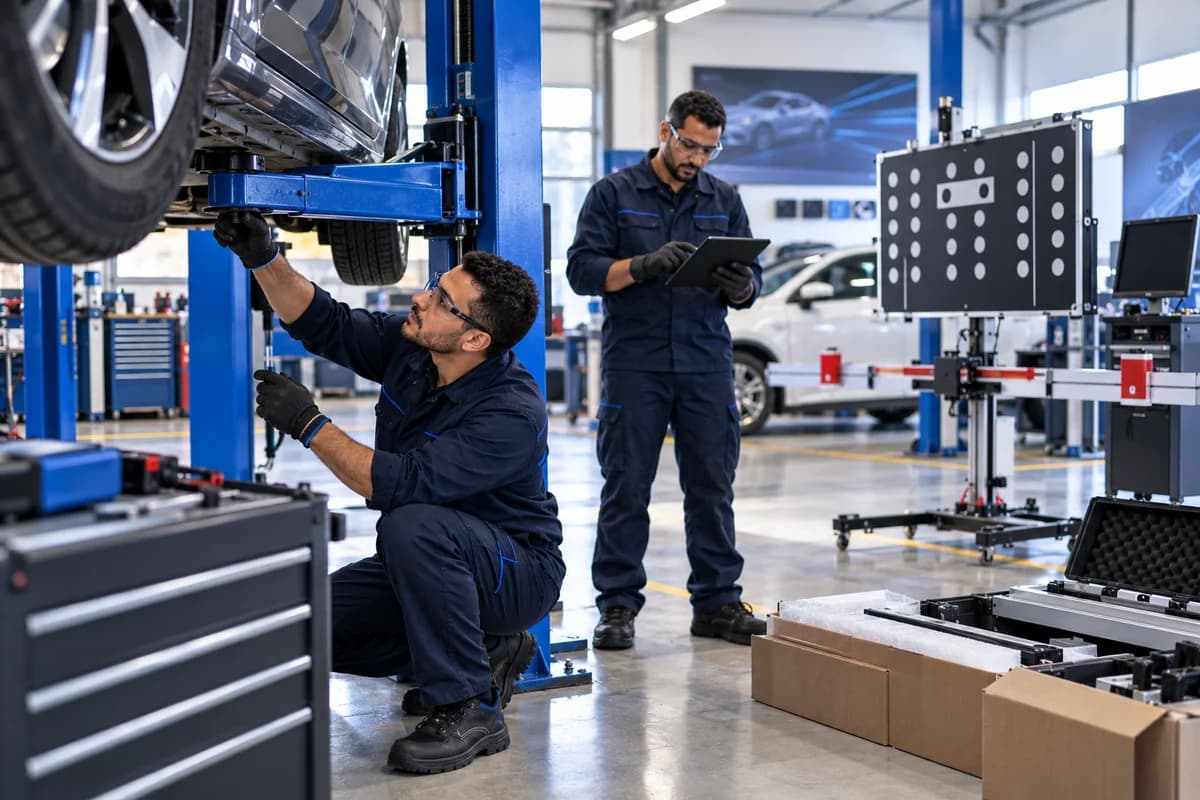
- Static: in the workshop, vehicle stationary, with targets placed at precise distances and heights. It needs a level floor, clear space and controlled lighting.
- Dynamic: on the road, the diagnostic tool starts the procedure and the vehicle is driven under defined conditions (speed, visible road markings, weather).
Some vehicles need one, the other, or both in sequence.
Prerequisites not to overlook
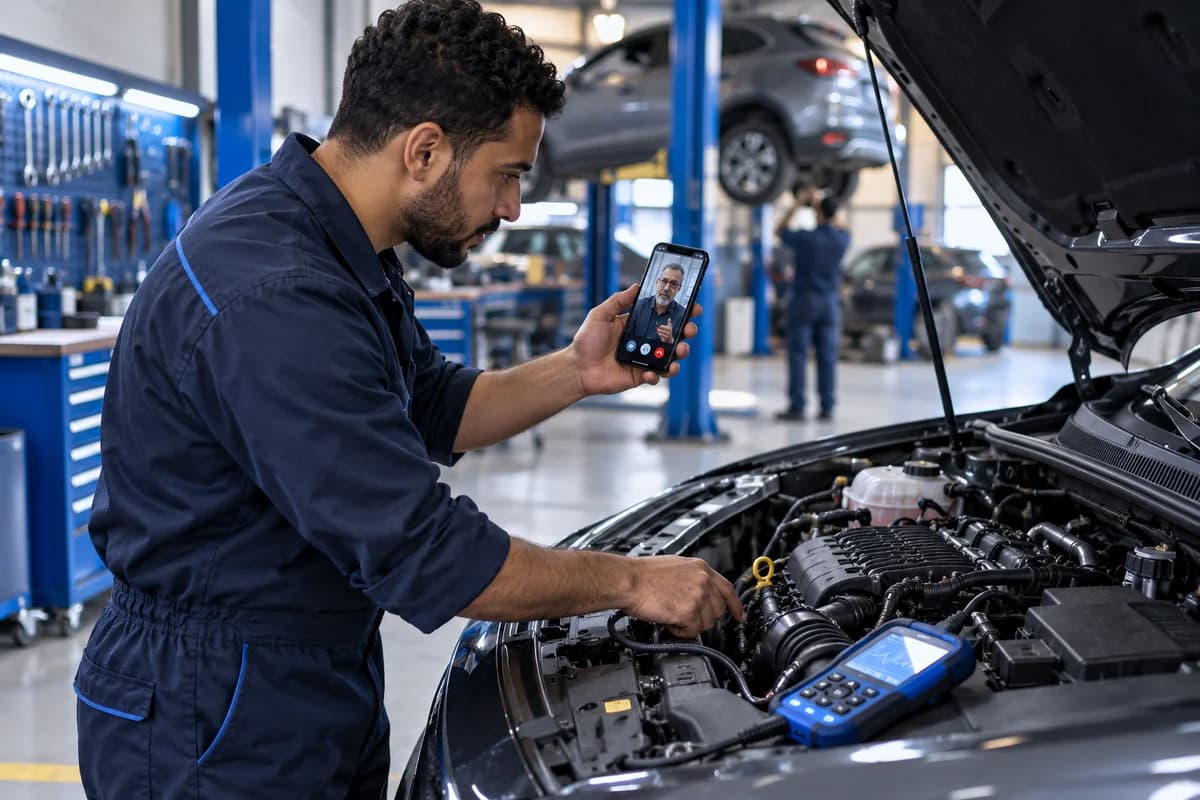
- Run a pre-repair scan to record existing fault codes.
- Prepare the vehicle as required: tyre pressures, fuel level, empty or loaded as per the procedure.
- Check and correct wheel alignment before calibrating, otherwise the sensor is aligned to a wrong reference.
- Calibrate with the manufacturer's tool and procedure.
- Run a post-repair scan and a road test, then keep the report.
The calibration report protects the workshop: it proves the system was restored according to the manufacturer's rules.
Equip and train your workshop
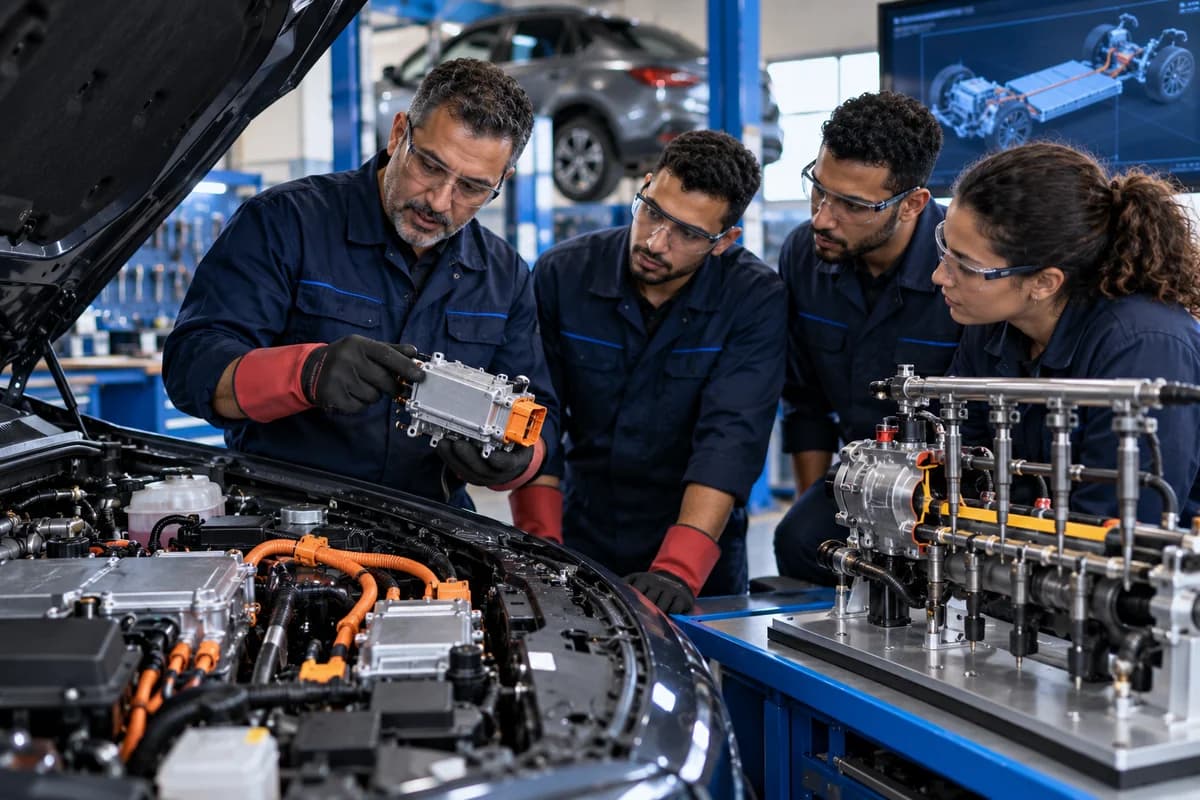
ADAS calibration needs specific equipment and a suitable space. NUVIO supports equipment manufacturers and workshops: installation and commissioning of calibration bays and ADAS masterclasses for technicians.
The information in this article is general. Always follow the procedure of the vehicle manufacturer and of the calibration equipment maker.