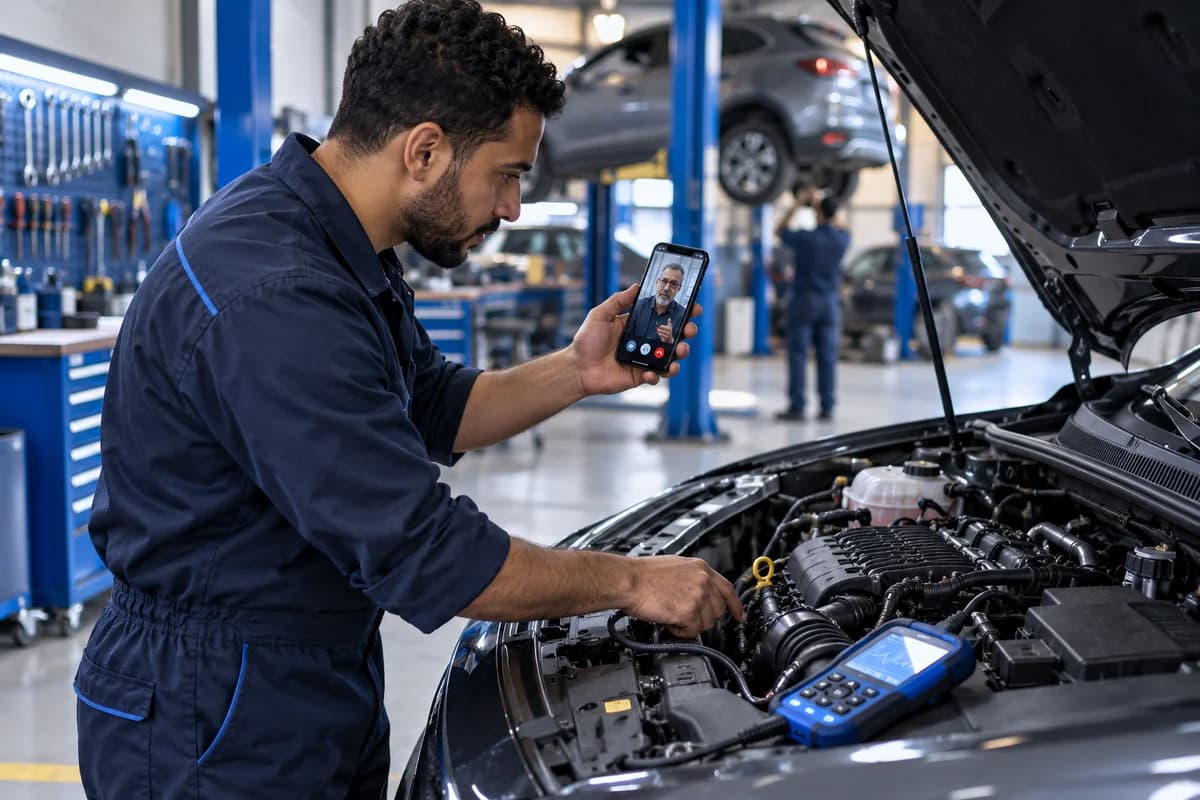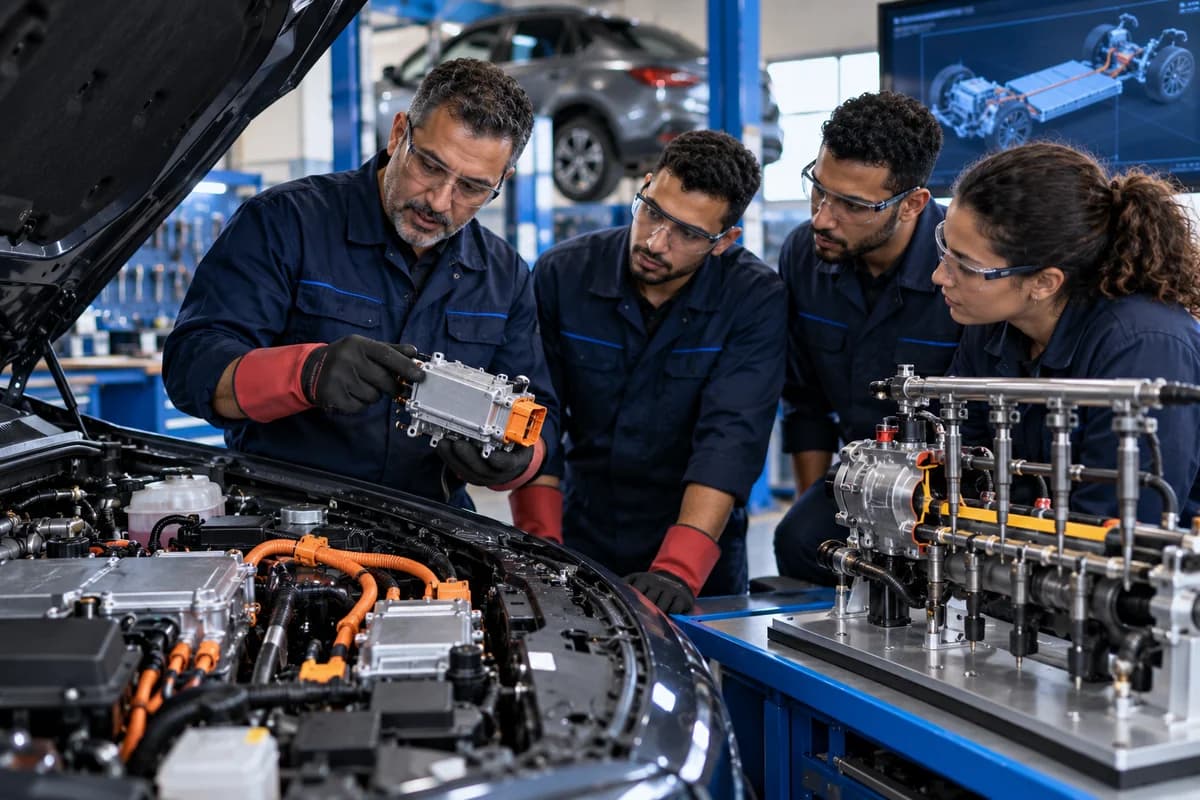
A hybrid or electric vehicle carries a high-voltage battery of several hundred volts, which is dangerous if mishandled. Any work on high-voltage components must be done by a trained and authorized technician, with the right equipment and a strict de-energizing procedure.
Why the risk is different
On a combustion vehicle, the electrical system runs at 12 V or 24 V. On a hybrid or electric vehicle, the traction battery and related components (inverter, electric motor, A/C compressor, charger) run at high voltage, often between 200 and 800 V DC. Contact can cause a severe electric shock, an arc flash or burns.
The battery is also a thermal risk: after an impact, immersion or overheating, it can go into thermal runaway and catch fire, sometimes hours later.
The basic rules
- Identify the vehicle: badges, orange cables, manufacturer plate. If in doubt, treat the vehicle as high voltage.
- Train and authorize: only technicians trained in electrical risk work on high-voltage components. In Europe, the French standard NF C18-550 is a common reference for authorizing people.
- Mark off the area: a dedicated bay, signage, access limited to authorized people.
- Wear protective equipment: insulating gloves rated for the voltage (checked before each use), face shield, clothing without metal parts, insulated tools.
- Never cut, pierce or bend an orange cable or open a battery without the manufacturer's procedure.
- Lift the vehicle at the correct points so as not to crush the battery pack.
De-energizing, step by step
The exact procedure depends on the manufacturer. It usually follows these steps:
- Switch off the ignition and move the key away (keyless key out of range of the vehicle).
- Disconnect the 12 V battery, which controls the high-voltage relays.
- Remove the service plug or the disconnect device provided by the manufacturer, and keep it on you.
- Wait the time stated by the manufacturer for the capacitors to discharge.
- Verify the absence of voltage with a suitable, tested measuring device, at the points given in the procedure.
- Lock out the vehicle: "work in progress, do not re-energize" tag.
Damaged or flooded vehicles
An electric vehicle that has crashed or been in water must be treated as dangerous: store it outdoors, away from other vehicles and buildings, watch for heat and smoke, and work according to the manufacturer's procedure and the emergency services' instructions.
This article sets out general principles. It does not replace training, authorization or the vehicle manufacturer's documentation.
Train your teams
NUVIO runs hybrid and EV safety masterclasses for workshop networks, fleets and distributors: risk identification, equipment, de-energizing procedure and hands-on exercises.